
Eurasian Curlew
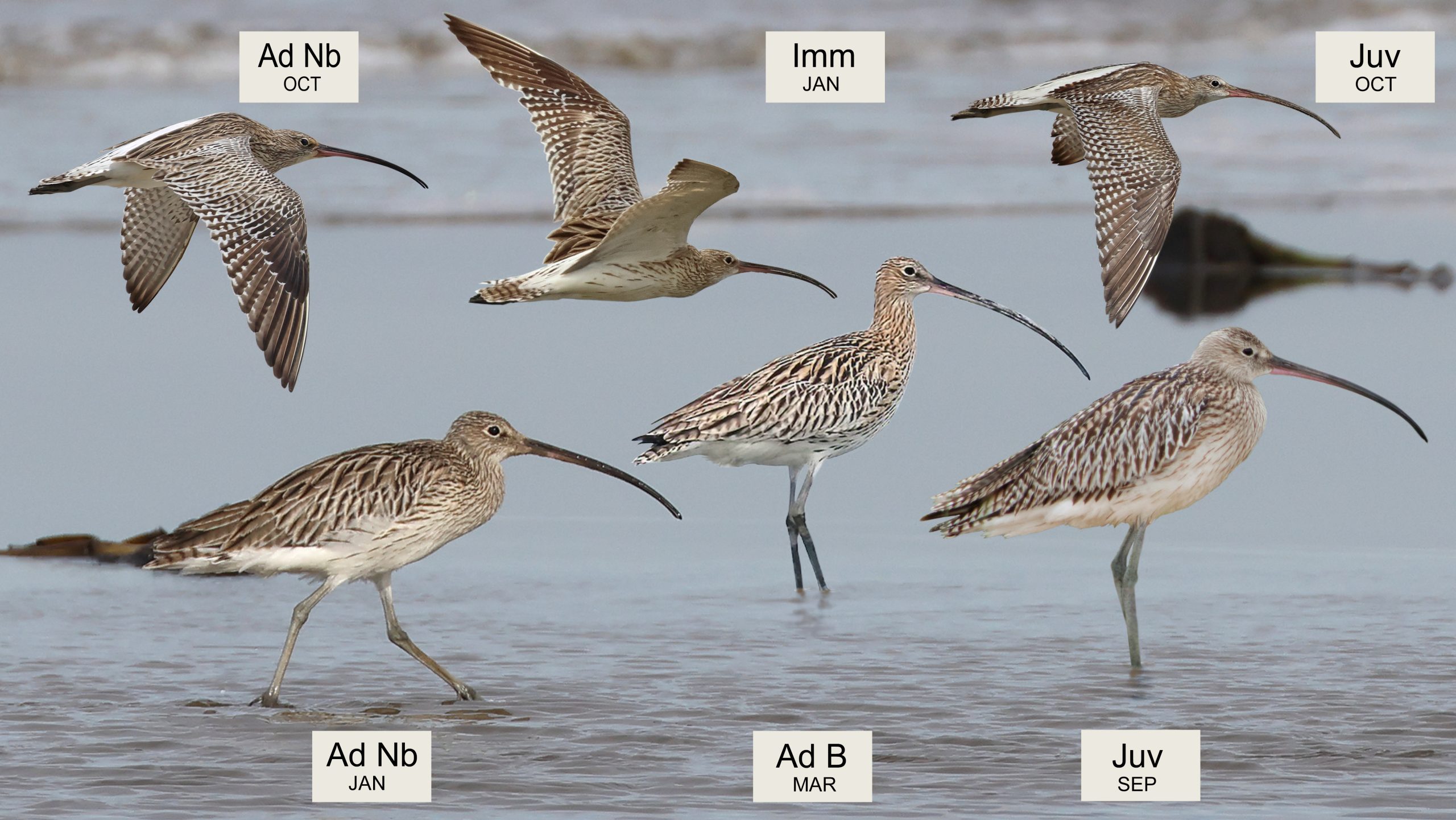
Click image to enlarge © Credits: Dave Bakewell & Lim Ying Hien
SCIENTIFIC NAME
Numenius arquata
MALAY NAME
Kendi Besar Biasa
CONSERVATION STATUS
NT
Status
Coastal migrant and non-breeding visitor, favouring sites with extensive mudflats.
Identification
Very large, mid-brown shorebird with very long, decurved bill. In flight, white rump and back and unmarked white underwing coverts are diagnostic. Ad Nb: (Aug – Jan) Dark-centred, pale-edged upperpart feathers grey-brown and buff, with wing coverts usually markedly paler than scapulars. Throat, breast and flanks finely streaked with few or no cross-bars. Ad B:(Feb – Mar) Head, neck, mantle and scapulars have a warm gingery wash and more distinct black flank streaks. Juv: (Aug – Oct) Neat plumage, with wing coverts and tertials more distinctly patterned than adults.
Similar Species
Paler above than Whimbrel and Far Eastern Curlew, especially wing coverts. White vent and ‘thighs’ distinctive. Compared to Far Eastern Curlew, tertials are more weakly barred; rear flanks are streaked rather than barred; head averages more contrasting, with darker lores and indistinct paler supercilium.
Typical behaviour
Feeds on marine invertebrates, including molluscs, crabs and polychaetes by probing deep beneath the substrate surface, sometimes twisting the head to capture prey. Usually feeds near the tideline or in shallow water. Shy. Feeds solitarily or in loose flocks; gathers into larger flocks to roost at high tide.
Vocalizations
Flight call a ringing, upslurred cuur-lee https://xeno-canto.org/768351. Also bubbling notes when gathering to roost https://xeno-canto.org/775930.
Range
Occurs in low numbers at preferred sites on the west coast of Peninsular Malaysia, except for the North Central Selangor Coast IBA, where several thousand birds regularly winter. Much scarcer in Bornean Malaysia.
Seasonality
Most frequently seen mid-August – mid-May. Some immatures oversummer in Malaysia.


