
Pacific Golden Plover
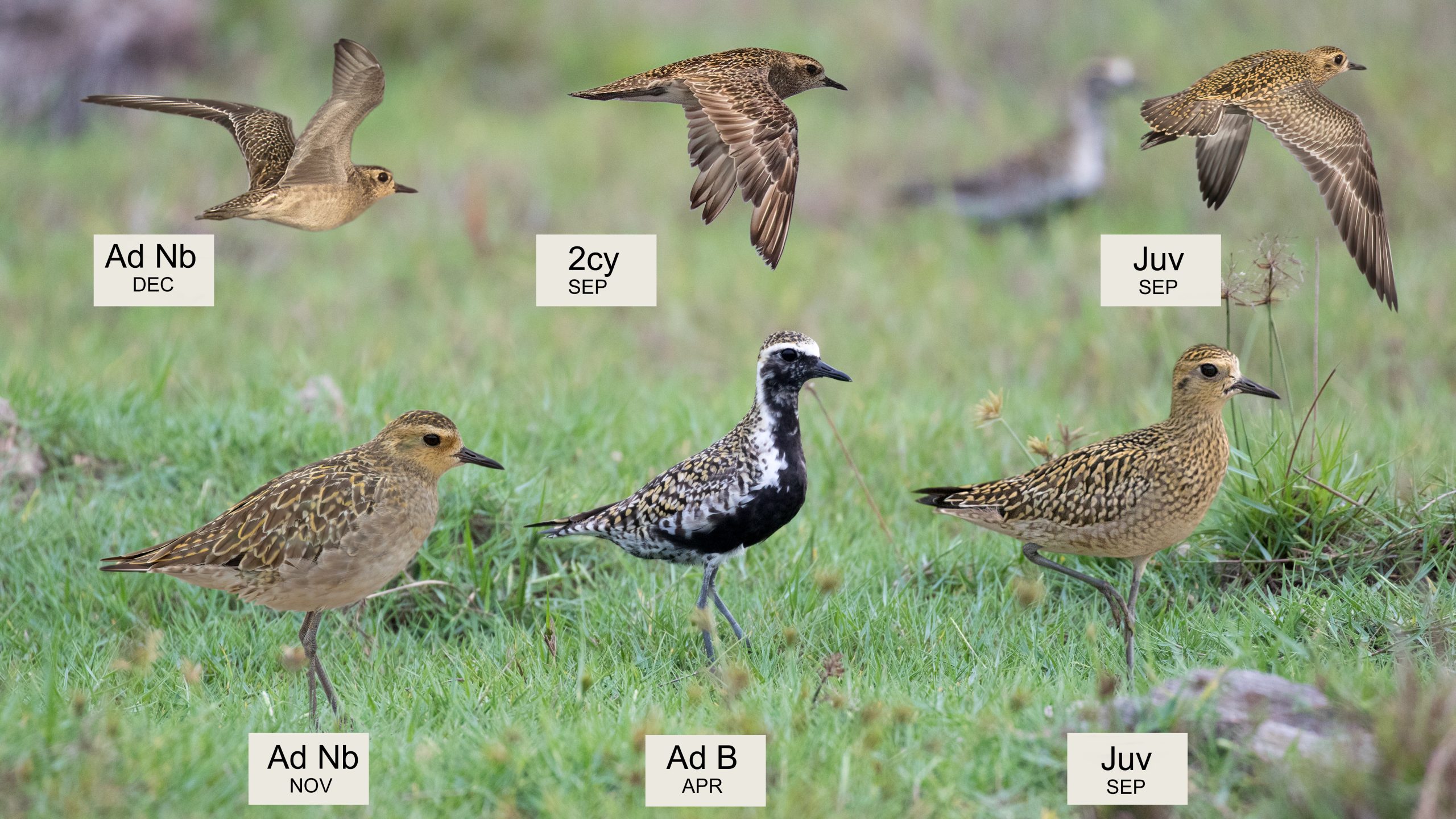
Click image to enlarge © Credits: Dave Bakewell
Status
Common migrant and winter visitor, occurring in a wide variety of habitats from intertidal mudflats to inland fields and freshwater marshes, even in housing estates and on busy roundabouts.
Identification
The smaller of the Pluvialis plovers, heavily spangled upperparts are generally yellow-toned. Elegant, with long legs and rather fine, sharp-tipped bill. In flight, looks uniform yellowish brown above, with narrow white wingbar. Evenly grey underwing and axillaries diagnostic. Ad B: (Mar-Aug) Black face and underparts separated from richly golden, brown and cream spangled upperparts by white border, mottled on flanks. Males more richly coloured than females. Ad Nb/Imm: (Aug – Mar) Sides of head plain yellowish, often with dark spot on rear ear coverts, capped by darker brown crown. Upperparts spangled golden yellow and brown; throat, breast and flanks plain grey-brown, belly whitish. Juv: (Aug – Sep) similar colouration to Ad Nb but breast and flanks neatly streaked and barred and upperpart feathers neat and regularly patterned. Colour variations from rich golden to rather grey occur, the latter inviting confusion with American Golden Plover (unrecorded in Malaysia) and Grey Plover.
Similar Species
See Grey Plover. Extralimital American Golden Plover is greyer overall, longer-winged, shorter-legged and -billed. Extralimital Eurasian Golden Plover is bulkier and has white underwings.
Typical behaviour
Slow and regular pause-walk-peck action. Tends to stand quite upright. Very vocal, both in flight and on the ground. Roosts in dense flocks.
Vocalizations
Fluty whistles, including a Spotted Redshank-like chu-wit. https://xeno-canto.org/772341.
Range
Common migrant and winter visitor along all coasts; also occurs well inland in agricultural landscapes
Seasonality
Most frequently seen between mid-August and mid-May.


