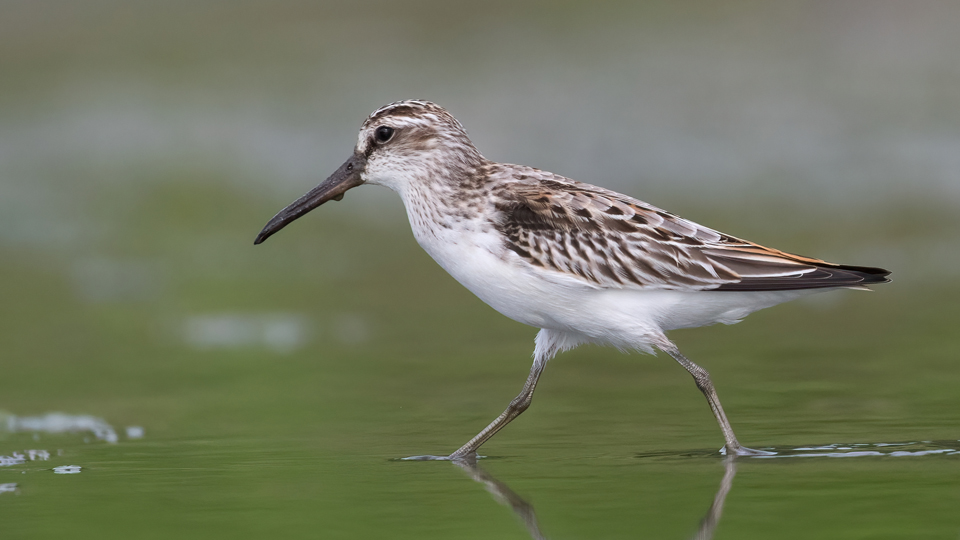
Curlew Sandpiper
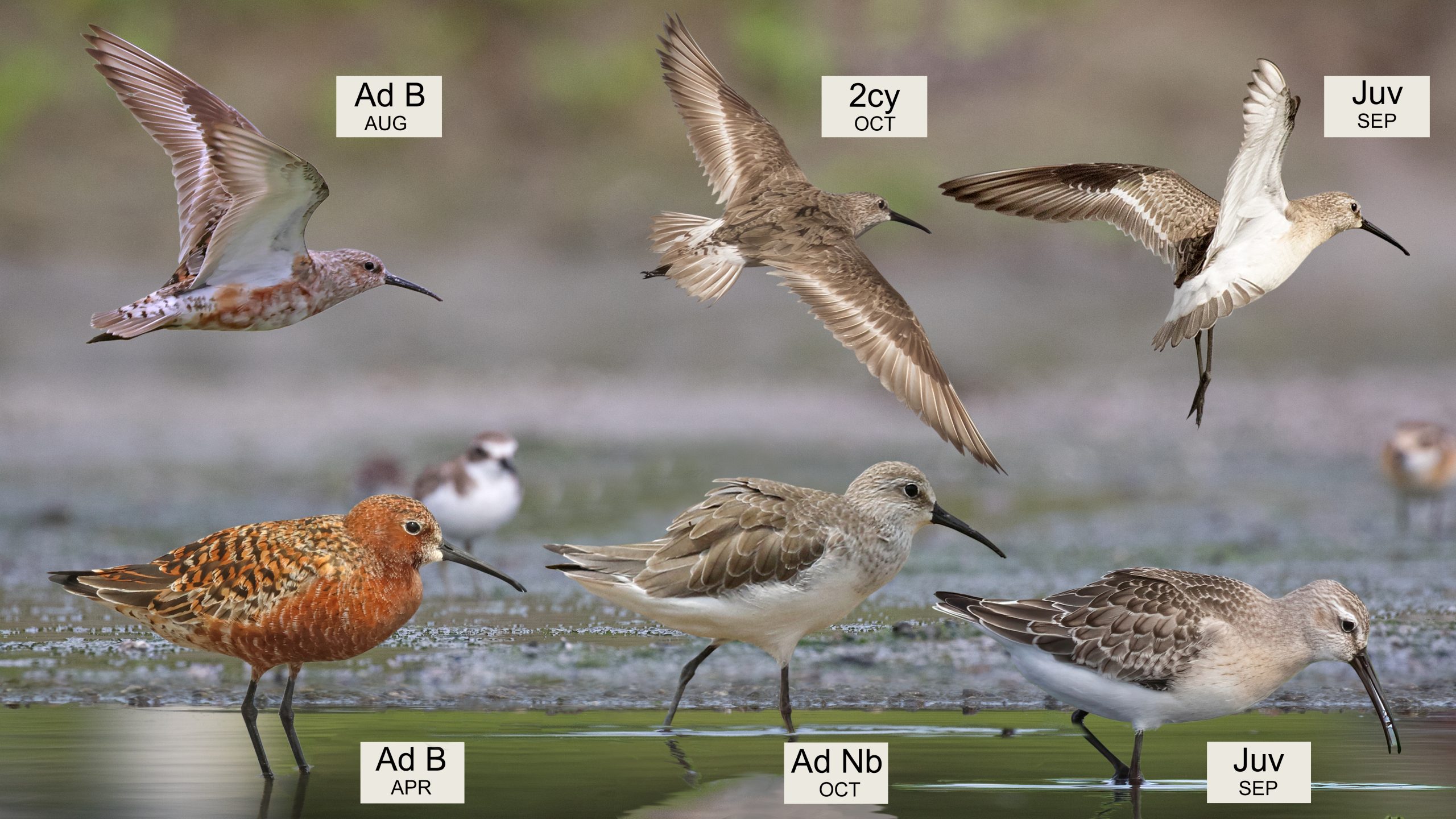
Click image to enlarge © Credits: Dave Bakewell
SCIENTIFIC NAME
Calidris ferruginea
MALAY NAME
Kedidi Paruh Lengkuk
CONSERVATION STATUS
NT
Status
Migrant and non-breeding visitor to coast and coastal wetlands.
Identification
Small, elegant sandpiper with finely tapered, decurved bill (longer than head) and longish black legs. In flight,seen from above, white rump (occasionally with some barring) and thin white wingbar distinguishes it from similar species. Underwing coverts and axillaries plain white. Ad B: (Mar – Aug) Rich chestnut-rufous head and underparts and orange and black barred mantle and scapulars. Ad Nb: (Sep – Feb) Grey, lightly streaked head and breast, with darker lores, whiter throat and supercilium. Belly, flanks and vent white. Mantle, scapulars, wing coverts and tertials pale grey, edged paler, with thin dark shafts. Juv: (Aug- Sep) Differs from Ad Nb in having a pale peach-yellow wash to the breast and black anchor markings on the scapulars.
Similar Species
Plumage at all stages similar to Red Knot but smaller and slimmer, with longer legs and decurved bill. Great Knot has similar bill shape but is much larger and more stocky. Dunlin and Broad-billed Sandpiper have similar bill shape but much shorter legs. Red-necked Stint is much smaller, with a shorter, straight bill.
Typical behaviour
Forages by rapid, continuous probing while walking, singly or in flocks. Feeds mainly on polychaete worms and also small molluscs. Roosts in large flocks.
Vocalizations
Flight call a high pitched chatter, similar to sand-plovers. https://xeno-canto.org/190971.
Range
Largest numbers occur on the west coast of Peninsular Malaysia, with much smaller numbers on east-facing coastline and in Bornean Malaysia. Population in sharp decline over the last few decades. Counts of 1000+ are now noteworthy.
Seasonality
Most frequently seen from early August – mid-May