Broad-billed Sandpiper
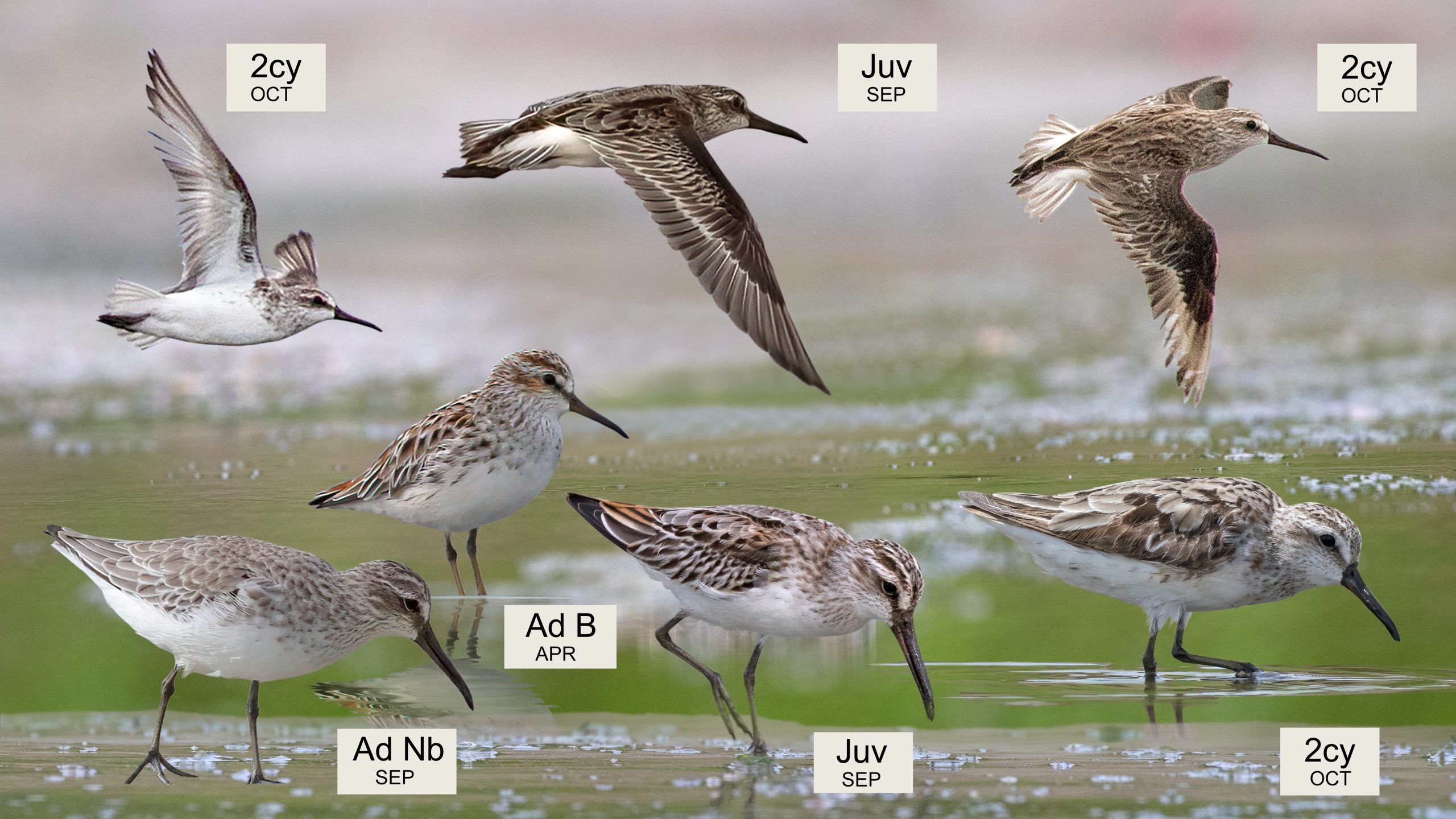
Click image to enlarge © Credits: Dave Bakewell
SCIENTIFIC NAME
Calidris falcinellus
MALAY NAME
Kedidi Paruh Lebar
CONSERVATION STATUS
LC
Status
Migrant and non-breeding visitor in moderate numbers. Large flocks of c500 can sometimes be observed on the west coast of Peninsular Malaysia.
Identification
Small, short-legged, stint-like sandpiper with longish, thick bill which droops at the tip. Bold head pattern in all plumages. Legs dark grey – dark olive. In flight, looks ‘front-heavy’ due to bill length, and the fact that the toes barely extend beyond the tail. Above, thin, white greater covert bar and dark leading edge to wing, broad dark central rump and tail, paler on either side. From below, dark leading wing edge is often prominent. Ad B: (Mar – Aug) Dark brown – chestnut crown and ear coverts, divided by creamy lateral crown stripe (“upper supercilium”) and supercilium, lores blackish, chin and throat white. Chest and fore flanks heavily streaked blackish to dark brown, belly and vent white. Mantle, scapulars and tertials black-centred, edged white to rich orange-chestnut. Wing coverts dark centred, edged cream. Ad Nb: (Sep – Feb) Similar pattern to Ad B, but dark areas,except for lores, replaced by pale grey. Juv: (Aug – Sep) Head pattern similar to Ad B; scapulars and tertials have dark centres and creamy to chestnut fringes; wing coverts blackish with whitish edges. By Sep, grey formative plumage scapulars have replaced most juvenile ones.
Similar Species
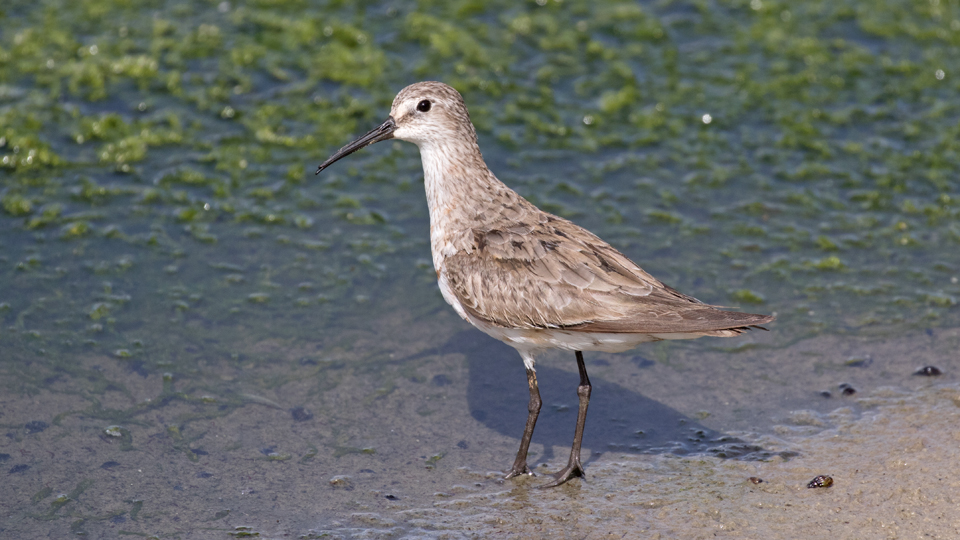
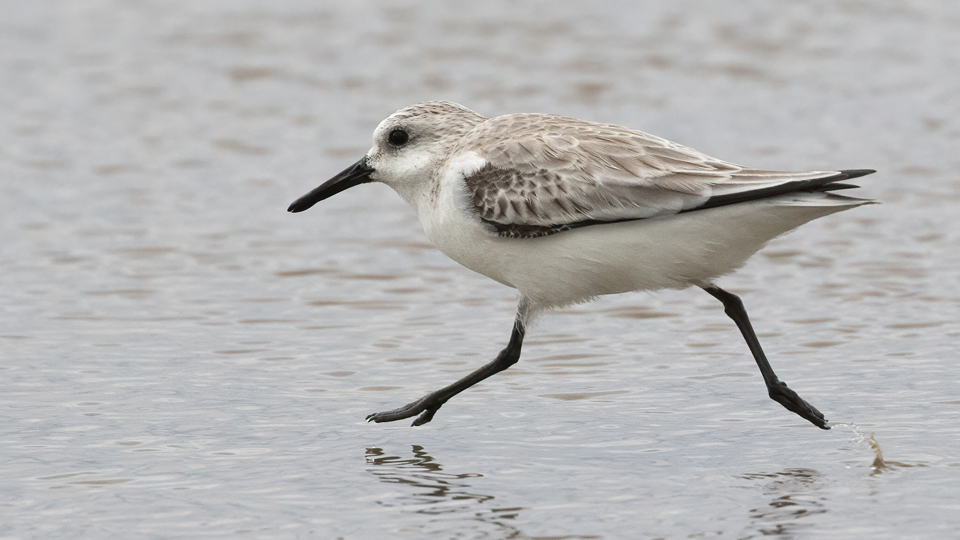
Much shorter-legged and smaller than Curlew Sandpiper, so appears closer to the ground. Slightly larger than stints, and plumage can superficially resemble Long-toed Stint and Little Stint, but bill is much longer.
Typical behaviour
Busy peck-and-walk foraging action, on water’s edge or in belly-deep water. Often mixes with Red-necked Stints and other small Calidrids when feeding.
Vocalizations
Typical flight call is an upslurred, rolling trill https://macaulaylibrary.org/asset/117252421.
Range
Exclusively coastal, favouring intertidal mudflats and nearby brackish water habitats. Occurs, usually in flocks of <100, along the west coast of Peninsular Malaysia, the east coast of Johor and sporadically along the Bornean Malaysian coast.
Seasonality
Most frequently seen from early September – early April.