Little Stint
Click image to enlarge © Credits: Dave Bakewell
SCIENTIFIC NAME
Calidris minutus
MALAY NAME
Kedidi-Kerdil Perang
CONSERVATION STATUS
LC
Status
Scarce migrant and non-breeding visitor.
Identification
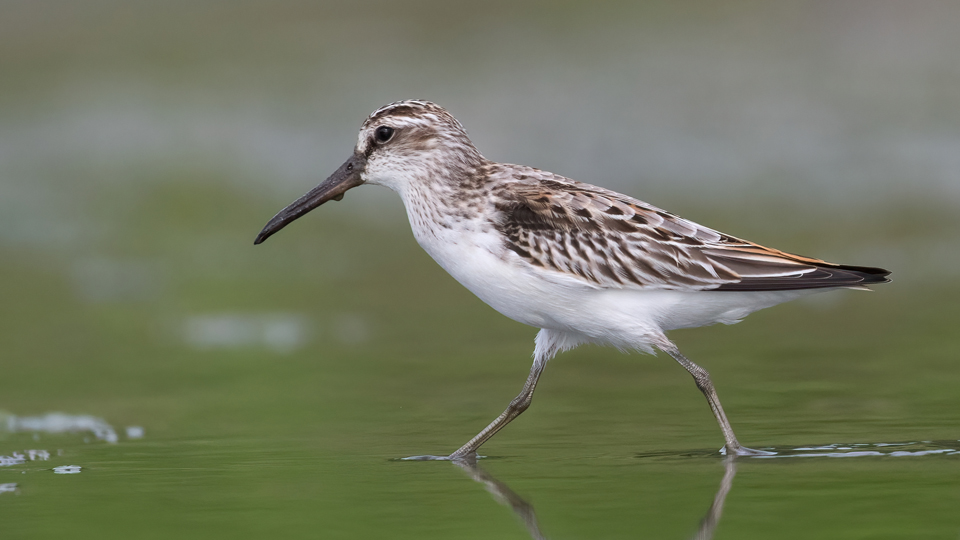
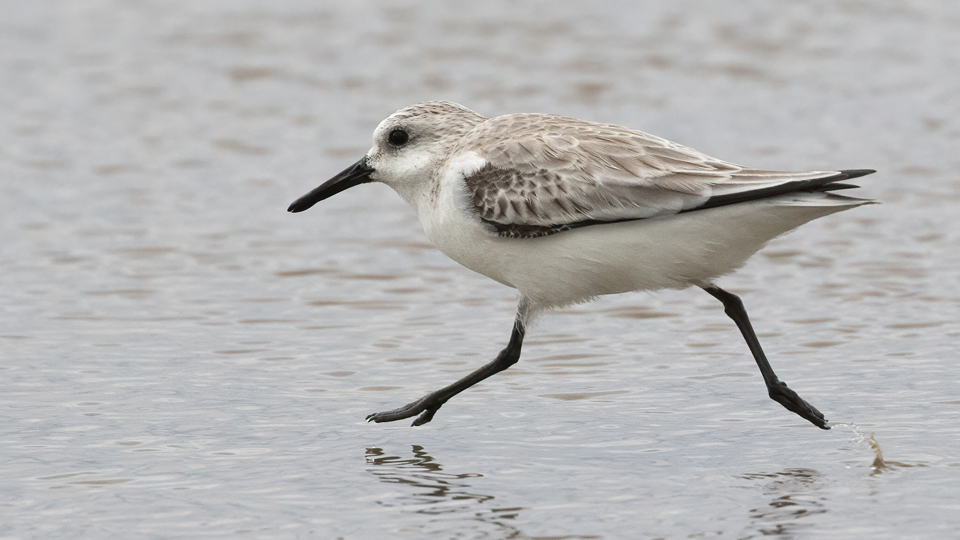
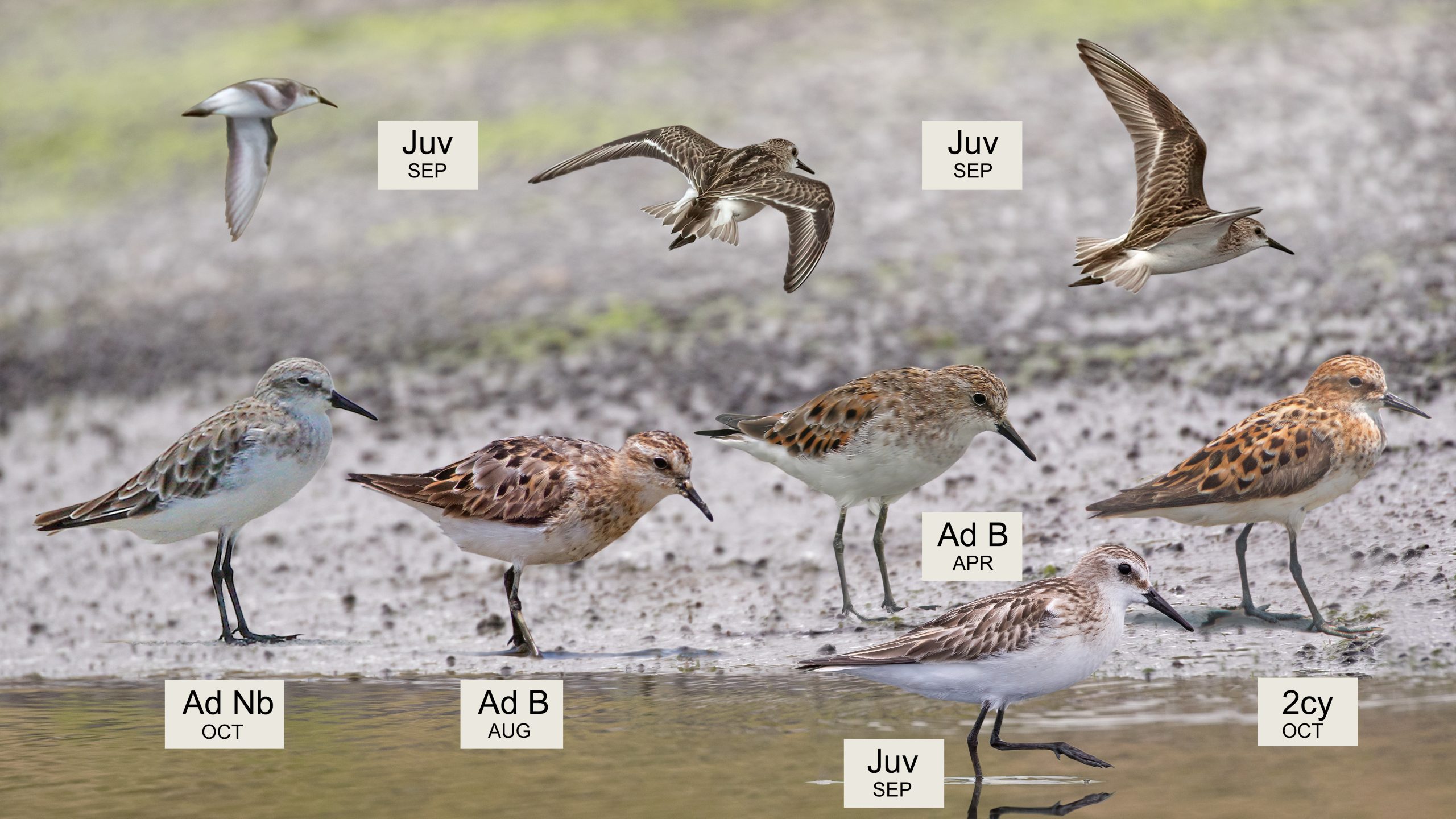
Plump, small-headed, fine-billed, relatively long-legged stint. Important structural features in all plumages include long, thin legs; slightly decurved bill tapering to a fine point; small head and sloping forehead giving a ‘snouty’ expression; rounded body shape and ‘humped shoulders’; somewhat upright stance with head sitting on top of body. In flight, very similar to Red-necked Stint, but more pronounced dark leading edge to underwing. Ad B: (Apr – Aug) Head chestnut, streaked darker on crown and nape, dark lores and whitish supercilium; throat unmarked white; breast sides chestnut with blackish streaks throughout, whiter but still streaked in central breast; belly, flanks and vent umarked white. Scapulars, tertials and wing coverts black centres and broad, well-demarcated chestnut fringes, paler at tip.In worn plumage a split supercilium may be prominent, and chestnut areas may become yellowish or straw-coloured. Ad Nb: (Sep – Mar) Plumage very similar to Red-necked Stint, but supercilium weaker over eye, and may taper toward a point at rear edge. Overall, upperparts feathers are darker, smoke-grey with more prominent dark centres than on typical Red-necked. Underparts below breast are unmarked white. Best identified with help of structural features. Juv: (Aug – Oct) Central crown dark, contrasting with paler sides; sides of breast buff with distinct darker spots or streaks; mantle, scapulars, wing coverts and tertials are uniformly blackish-centred with well demarcated buff fringes. Pale lines on mantle edge prominent.
Similar Species
Extremely similar to Red-necked Stint, from which it best differentiated by a combination of structural, behavioural and plumage differences. Red-necked typically has a shorter, straighter, thicker bill; shorter, thicker legs; bigger head and thicker neck; more horizontal stance with rather flat back profile. Red-necked typically walks more slowly as it forages. Precise pattern of central crown, breast sides and especially, scapulars and wing coverts are important to note (see differences in text).
Typical behaviour
Rapid foraging action (walking and pecking), typically faster and more frenetic than Red-necked Stint. When singles occur in Red-necked Stint flocks, there are often aggressive altercations between the two species.
Vocalizations
Similar to Red-necked Stint, but individual notes shorter and more level-pitched: https://xeno-canto.org/190975
Range
Previously considered a vagrant, in recent years, as identification criteria have been more widely understood, has been shown to be a regular visitor, in small numbers (<50), mainly to coastal intertidal habitats but also to freshwater sites, some inland. Shows a slight preference for such sites compared to Red-necked Stint.
Seasonality
Most frequently seen from September to early December.