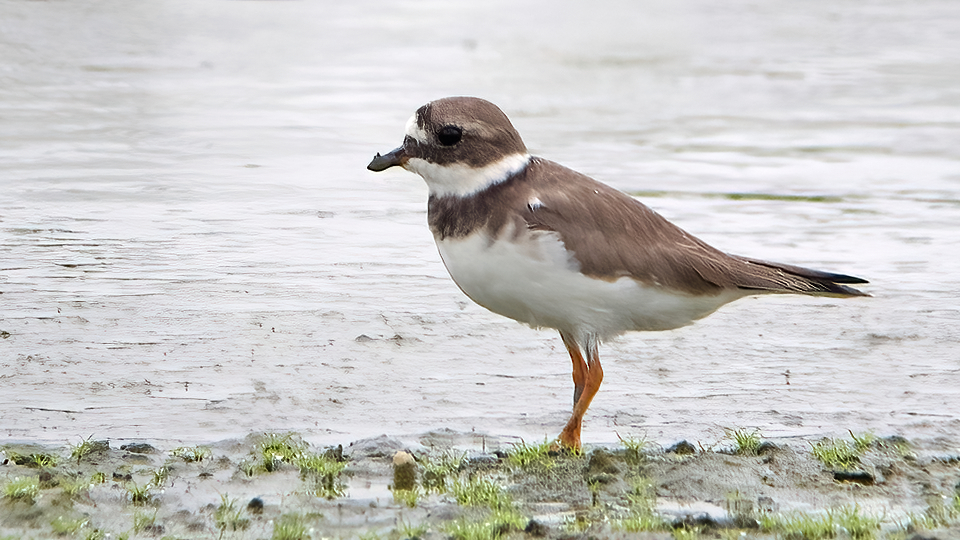
Greater Sand-Plover
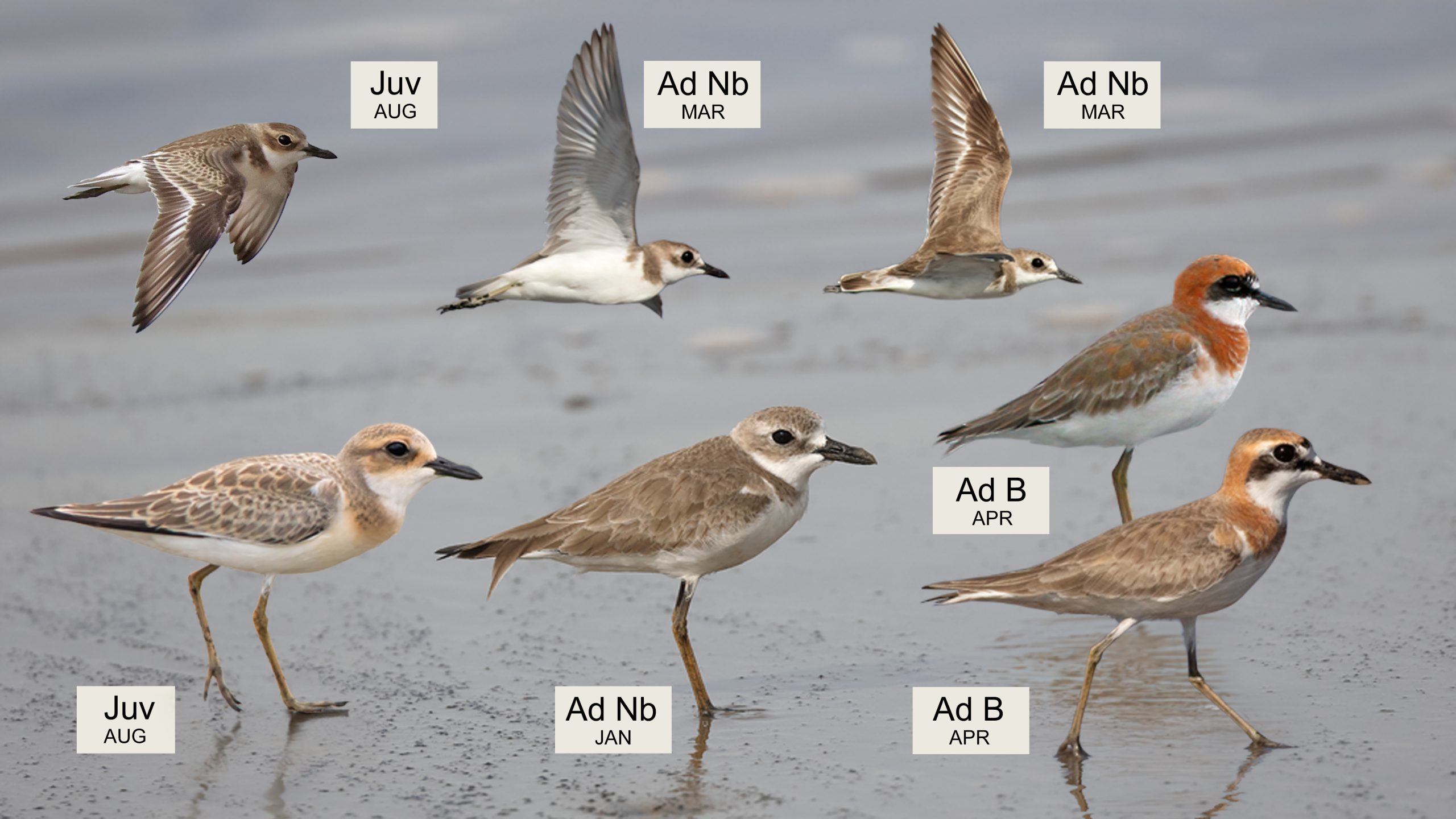
Click image to enlarge © Credits: Dave Bakewell
SCIENTIFIC NAME
Anarhynchus leschenaultii
MALAY NAME
Rapang-Sisir Besar
CONSERVATION STATUS
LC
Status
Migrant and winter visitor, normally occurring in far smaller numbers than Tibetan Sand-Plover. Coastal, preferring sandy beaches but also occurs on mudflats.
Identification
Ad B: (Mar – Apr) Sand-brown above, with whitish fringes to coverts when fresh, rich orange broad breast band usually narrower than on Tibetan and Siberian Sand-Plovers; orange nape and often, entire crown and some scapulars, black ear coverts and forecrown, usually with white ‘headlights’ on the forehead (♂︎ brighter orange and with blacker head markings than♀︎). Moults into Ad Nb before arrival in Malaysia, so a bird showing breeding colours in autumn is much more likely to be Tibetan than Greater. Ad Nb/Imm: Uniform sand-brown upperparts and head, with brown lateral breast patches; white supercilium, throat and forehead. Fresh coverts show whitish fringes. In worn plumage, may show whitish nuchal collar. Juv: (Aug – Oct) in fresh plumage, broad buff fringes to upperpart feathers, with warm buff/peach wash to breast and supercilium. Legs tend to be brighter and yellower than adults.
Similar Species
Very similar to Tibetan and Siberian Sand-Plovers, but slightly larger, longer-legged and with different proportions; body looks long and attenuated, eye and head large and bill long, thick and relatively sharp-tipped (culmen bulge covers final half of bill length). In flight, very similar to Tibetan and Siberian Sand-Plovers and best distinguished by bill proportions. Toes project beyond tail. Leg colour variable but most commonly yellowish.
Typical behaviour
When hunting preferred prey, crabs, stands motionless for some time before rapid and sometimes extended dash with head held low to seize prey before it reaches its hole. When feeding on marine worms and smaller prey, feeding behaviour slower, more like other sand-plovers.
Vocalizations
Very similar to other sand-plovers but slightly higher-pitched https://xeno-canto.org/464913 .
Range
Regular in intertidal areas, particularly sandier substrates in both Peninsular and Bornean Malaysia. Present in far smaller numbers than Tibetan Sand-Plover.
Seasonality
Most frequently seen between August and May.