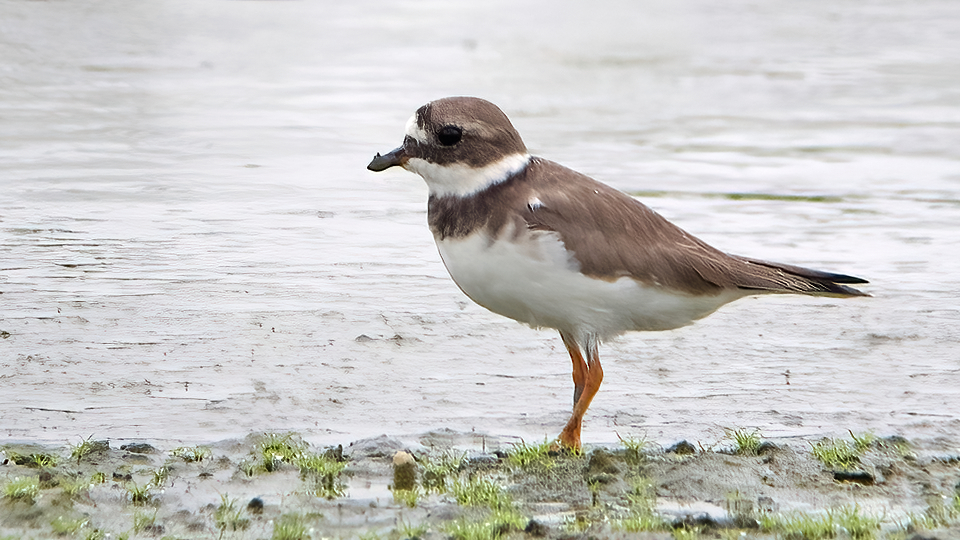
Siberian Sand Plover
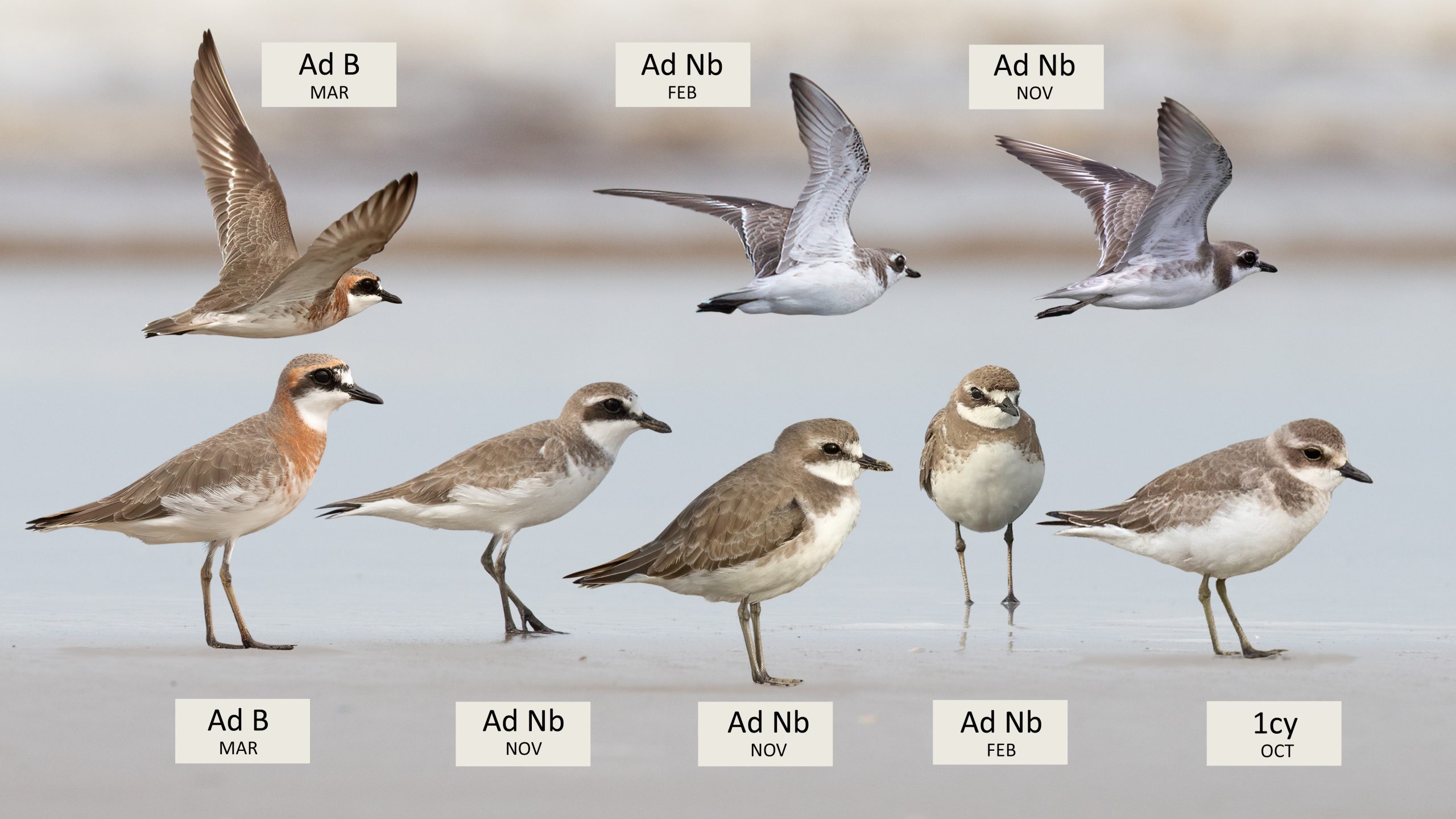
Click image to enlarge © Credits: Dave Bakewell
SCIENTIFIC NAME
Anarhynchus mongolus
MALAY NAME
Rapang-Sisir Kecil Utara
CONSERVATION STATUS
EN
Status
Scarce to rare migrant and non-breeding visitor in Bornean Malaysia. Unrecorded in Peninsular Malaysia.
Identification
Very similar to Greater Sand Plover and Tibetan Sand Plover (with which it was until recently considered conspecific) but has shorter, more blunt-tipped bill and slightly shorter legs. In flight, looks long-winged; white wingbar is typically less extensive than on other sand plovers. Toes do not normally project beyond the tail. Brown on central rump broader than on other sand plovers, with little white on rump sides. Dusky flanks present on most birds are diagnostic when present. Axillaries and mid underwing-coverts may show dusky markings. Ad B: (Mar – Sep) Large triangular white forehead (unlike Tibetan), some with thin black central line (race mongolus) or twin ‘headlights’ separated by thick central line (race stegmanni). Upperparts usually darker and colder grey-brown than Tibetan. Breastband very broad (♂︎) or broad (♀︎), dark brick red to orange, often with dark edge to upper border. Dusky brown feathers along flanks on most birds diagnostic when present. Ad Nb: Ear coverts often slightly darker than crown and nape. Large triangular white patch on forehead always well-defined along upper edge, often bordered by blackish feathering. Breastband complete or almost so. Dusky feathers along flanks on most, but not all, birds diagnostic when present. 1cy: (Oct – Dec) In juvenile plumage, there may be little white on the forehead, and what there is grades into the grey-brown of the crown. The nape may be markedly paler than the ear-coverts and crown. In formative plumage, white forehead demarcated from brown crown, but not as clearly as on Ad Nb. In juvenile plumage, grey-brown upperparts with thin whitish fringes, especially thin on mantle and scapulars, wearing off quickly. After pre-formative moult, covert fringing is mostly worn away. In juvenile plumage, breastband often complete, lateral breast patches broad, often bordered below by extensive brown mottling on fore-flanks. Lacking or with limited peach wash in central breast. Dusky flank markings diagnostic when present, but often absent. After pre-formative moult, breast patches and flanks similar to adult.
Similar Species
From Kentish and White-faced Plovers by lack of white collar and longer legs. From very similar Tibetan Sand Plover by shorter, blunter bill, shorter legs, brown flank feathers and more clearly demarcated white forehead (see Identification for other differences). From very similar Greater Sand Plover by smaller size, shorter bill and dusky markings on flanks.
Typical behaviour
Similar to Tibetan Sand Plover.
Vocalizations
Range
Rare in Bornean Malaysia, preferring sandy beaches. Occurs in eastern Sabah in 10s; elsewhere only in single figures.
Seasonality
Arrives about a month after Tibetan and leaves roughly a month earlier. Records from September to April.